Impala
Aepyceros melampus
Conservation Status
Least ConcernMammalia · Artiodactyla · Bovidae
About
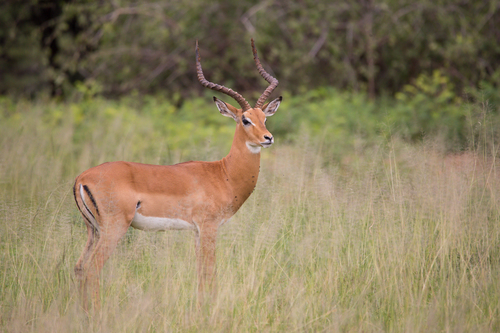
The impala or rooibok is a medium-sized antelope found in eastern and southern Africa. The only extant member of the genus Aepyceros, and tribe Aepycerotini, it was first described to Europeans by German zoologist Hinrich Lichtenstein in 1812. Two subspecies are recognised—the grassland-dwelling common impala, and the larger and darker black-faced impala, which lives in slightly more arid, scrubland environments. The impala reaches 70–92 cm (28–36 in) at the shoulder and weighs 40–65 kg (88–143 lb). It features a glossy, reddish brown coat. The male's slender, lyre-shaped horns are 45–92 cm (18–36 in) long.
Fun Fact
Impala can leap 3 metres high and 10 metres forward in a single bound, and they often jump over each other when fleeing predators, confusing the pursuer.
Quick Facts
Habitat
Savannas and woodlands
Diet
Herbivore
Lifespan
12-15 years
Threats
- Illegal Logging
- Wildfire