Giant Panda
Ailuropoda melanoleuca
Conservation Status
Near ThreatenedMammalia · Carnivora · Ursidae
About
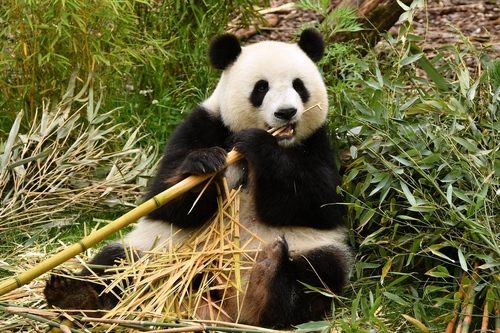
The giant panda, also known as the panda bear or simply panda, is a bear species endemic to China. It is characterised by its white coat with black patches around the eyes, ears, legs and shoulders. Its body is rotund; adult individuals weigh 100 to 115 kg and are typically 1.2 to 1.9 m long. It is sexually dimorphic, with males being typically 10 to 20% larger than females. A thumb is visible on its forepaw, which helps in holding bamboo in place for feeding. It has large molar teeth and expanded temporal fossae to meet its dietary requirements. It can digest starch and is mostly herbivorous with a diet consisting almost entirely of bamboo and bamboo shoots.
Fun Fact
Giant pandas have a modified wrist bone that acts as a 'pseudo-thumb,' giving them the dexterity to strip bamboo stalks — they eat up to 38 kg (84 lb) of bamboo daily to compensate for poor digestion of it.
Quick Facts
Habitat
Temperate bamboo forests
Diet
Herbivore
Lifespan
20-30 years
Threats
- Habitat Fragmentation
- Wildfire
- Poaching