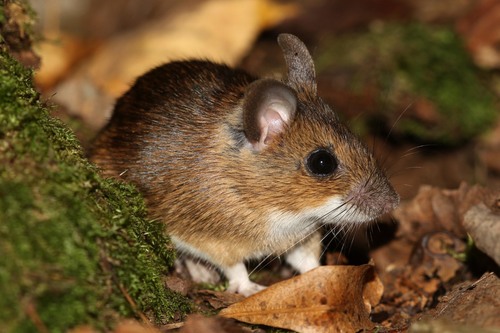
Yellow-necked Field Mouse
Apodemus flavicollis
Conservation Status
Least ConcernMammalia · Rodentia · Muridae
About
The yellow-necked mouse, also called yellow-necked field mouse or yellow-necked wood mouse, is closely related to the wood mouse, with which it was long confused. It was only recognised as a separate species in 1894. It differs in its band of yellow fur around the neck and in having slightly larger ears and usually being slightly larger overall. Around 100 mm in length, it can climb trees and sometimes overwinters in houses. It is found mostly in mountainous areas of southern Europe, but extends north into parts of Scandinavia and Britain. It facilitates the spread of tick-borne encephalitis to humans and is a reservoir species for the Dobrava virus, a hantavirus that is responsible for causing haemorrhagic fever with renal syndrome.
Fun Fact
It was only recognised as a separate species in 1894.
Quick Facts
Habitat
Range includes the more mountainous parts of Western Europe with the exception of northern Scandinavia, southern Spain and western France.
Diet
Feeds on buds, shoots, fruit, seedling plants and sometimes small invertebrates.
Lifespan
To be updated
Threats
- Habitat Change
- Human Disturbance