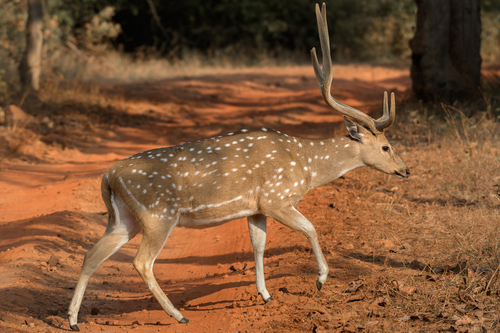
Chital
Axis axis
Conservation Status
Least ConcernMammalia · Artiodactyla · Cervidae
About
The chital, also called spotted deer and axis deer, is a deer species native to the Indian subcontinent. It was first described by Johann Christian Polycarp Erxleben in 1777. A moderate-sized deer, male chital reach 90 cm (35 in) and females 70 cm (28 in) at the shoulder. While males weigh 70–90 kg (150–200 lb), females weigh around 40–60 kg (88–132 lb). It is sexually dimorphic; males are larger than females, and antlers are present only on males. The upper parts are golden to rufous, completely covered in white spots. The abdomen, rump, throat, insides of legs, ears, and tail are all white. The antlers, three-pronged, are nearly 1 m long.
Fun Fact
Chital are the most abundant deer in India, and they have a mutualistic relationship with langur monkeys — the deer eat fruit dropped by monkeys above, while both species warn each other of predators.
Quick Facts
Habitat
Grasslands and forests
Diet
Herbivore
Lifespan
8-14 years
Threats
- Habitat Fragmentation
- Illegal Logging