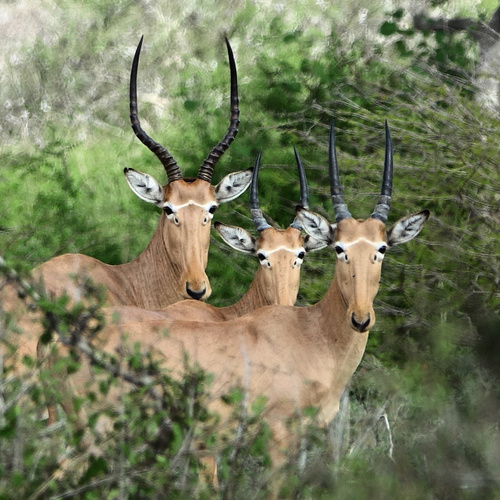
Hunter's Hartebeest
Beatragus hunteri
Conservation Status
Critically EndangeredMammalia · Artiodactyla · Bovidae
About
The hirola, also called the Hunter's hartebeest or Hunter's antelope, is a critically endangered antelope species found as of now, only in Kenya along the border of Somalia. It was first described by the big game hunter and zoologist H.C.V. Hunter in 1888. It is the only living member of the genus Beatragus, though other species are known from the fossil record. The global hirola population is estimated at 300–500 animals and there are none in captivity. According to a document produced by the International Union for Conservation of Nature "the loss of the hirola would be the first extinction of a mammalian genus on mainland Africa in modern human history".
Fun Fact
Kingdon does not consider the ecological requirements of the hirola unusual and in fact considers them to be more generalist than either Connochaetes spp.
Quick Facts
Habitat
Habitats range from open grassland with light bush to wooded savannahs with low shrubs and scattered trees, most often on sandy soils.
Diet
Feed on the dominant grasses of the region and Kingdon (1982) believes that quantity is more important than quality in the hirola's diet.
Lifespan
15 years
Threats
- Habitat Destruction
- Pollution
- Invasive Species
- Over-Collection
- Climate Change