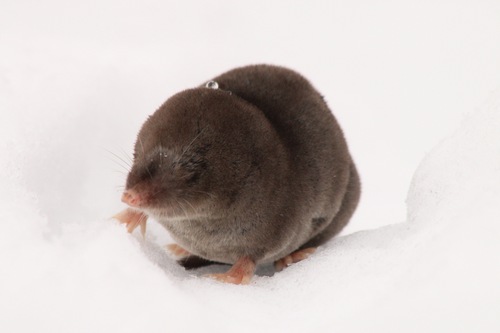
Northern Short-tailed Shrew
Blarina brevicauda
Conservation Status
Least ConcernMammalia · Eulipotyphla · Soricidae
About
The northern short-tailed shrew is the largest shrew in the genus Blarina, and occurs in the northeastern region of North America. It is a semifossorial, highly active, and voracious insectivore and is present in a variety of habitats like broadleaved and pine forests among shrubs and hedges as well as grassy river banks. It is notable in that it is one of the few venomous mammals. The specific epithet, brevicauda, is a combination of the Latin brevis and cauda, meaning "short tail".
Fun Fact
Northern short-tailed shrews are one of the very few venomous mammals — their saliva contains a toxin that can paralyze prey much larger than themselves, including mice and small rabbits.
Quick Facts
Habitat
Forests and grasslands
Diet
Insectivore
Lifespan
1-2 years
Threats
- Wildfire
- Deforestation