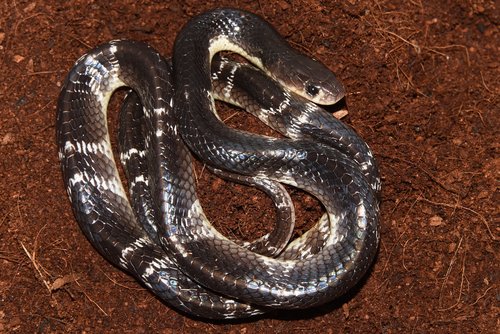
Indian Krait
Bungarus caeruleus
Conservation Status
Least ConcernReptilia · Elapidae
About
The common krait is a highly venomous snake species belonging to the genus Bungarus in the family Elapidae. Native to South Asia, it is widely distributed across India, Pakistan, Bangladesh, Sri Lanka, and Nepal, inhabiting diverse environments such as grasslands, agricultural fields, and human settlements. The species is nocturnal and is characterized by its black or bluish-black body with narrow white crossbands, typically reaching lengths of 3 to 4 feet. Known for its potent neurotoxic venom, the common krait is one of the "Big Four" snake species responsible for the majority of medically significant snakebites in South Asia.
Fun Fact
The venom is dominated by phospholipases A2 (PLA2), constituting approximately 64.
Quick Facts
Habitat
Range of environments, including scrub jungles, grasslands, agricultural fields, semi-desert areas, rocky terrains, and suburban gardens.
Diet
Feeds on small rodents, lizards, birds and frogs.
Lifespan
To be updated
Threats
- Habitat Change
- Human Disturbance