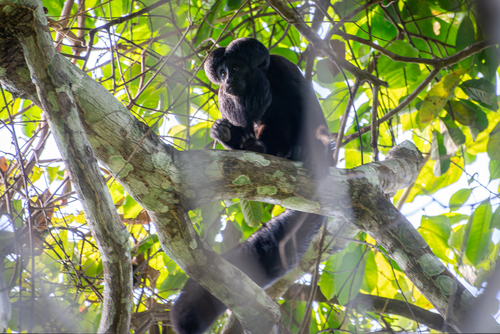
Black-bearded Saki
Chiropotes satanas
Conservation Status
EndangeredMammalia · Primates · Pitheciidae
About
The black bearded saki is a species of New World monkey, native to the Amazon rainforest of South America, specifically to an area of north-eastern Brazil. It is one of five species of bearded saki. Bearded sakis are medium-sized (50 cm), mostly frugivorous primates, specialised in seed predation. The genus name Chiropotes comes from Ancient Greek χείρ (kheír), meaning "hand", and ποτης (potēs), meaning "drinker", as the black bearded saki is sometimes observed immersing their hands in water and then bringing them to their mouth to drink. This behaviour was later found to be widespread among monkey species and not a distinguishing feature of this genus or species. The black bearded saki's habitat has undergone heavy habitat fragmentation, making the future conservation status of the species uncertain.
Fun Fact
Studies reveal that the black bearded saki can adapt to habitat up to 3% the size of its original range.
Quick Facts
Habitat
Restricted to a relatively small region from the Tocantins River in Pará east to around the Grajaú River in Maranhão (similar to the range of the equally threatened Kaapori capuchin).
Diet
Feed on more than 100 species and is able to adapt its diet.
Lifespan
18 years
Threats
- Habitat Loss
- Poaching and Hunting
- Human-Wildlife Conflict
- Disease