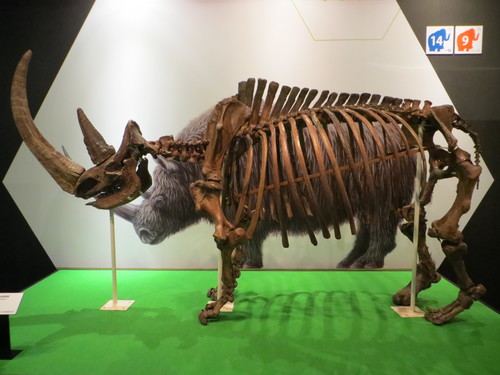
Woolly Rhinoceros
Coelodonta antiquitatis
Conservation Status
Data DeficientMammalia · Perissodactyla · Rhinocerotidae
About
The woolly rhinoceros is an extinct species of rhinoceros that inhabited northern Eurasia during the Pleistocene epoch. The woolly rhinoceros was large, comparable in size to the largest living rhinoceros species, the white rhinoceros, and covered with long, thick hair that allowed it to survive in the extremely cold, harsh mammoth steppe. It had a massive hump reaching from its shoulder and fed mainly by grazing on herbaceous plants that grew in the steppe. Mummified carcasses preserved in permafrost and many bone remains of woolly rhinoceroses have been found. Images of woolly rhinoceroses are found among cave paintings in Europe and Asia, and evidence has been found suggesting that the species was hunted by humans. Like other Pleistocene megafauna, the species became extinct as part of the end-Pleistocene extinction event. The range of the woolly rhinoceros contracted towards Siberia beginning around 17,000 years ago, with the youngest reliable records being around 14,000 years old in northeast Siberia, coinciding with the Bølling–Allerød warming, which likely disrupted its habitat, with environmental DNA records possibly extending the range of the species around 9,800 years ago. Its closest living relative is the Sumatran rhinoceros.
Fun Fact
The woolly rhinoceros was large, comparable in size to the largest living rhinoceros species, the white rhinoceros (Ceratotherium simum), and covered with long, thick hair that allowed it to survive in the extremely cold, harsh mammoth steppe.
Quick Facts
Habitat
Found in cave hyena dens with gnaw marks indicating that their remains were consumed by them, which to a large degree likely reflects scavenging of the carcasses of already dead rhinoceroses.
Diet
To be updated
Lifespan
000 years
Threats
- Habitat Change
- Human Disturbance