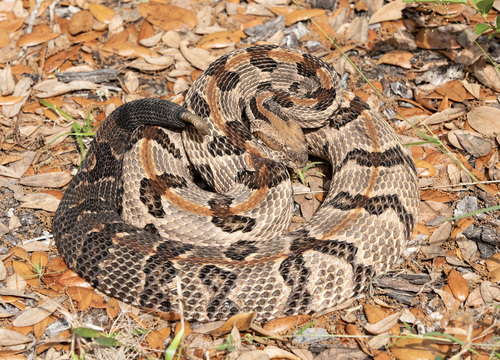
Timber Rattlesnake
Crotalus horridus
Conservation Status
Least ConcernReptilia · Viperidae
About
The timber rattlesnake, also known commonly as the canebrake rattlesnake and the banded rattlesnake, is a species of pit viper in the family Viperidae. The species is native to the eastern United States. Like all other pit vipers, it is venomous, with a very toxic bite. Its venom is extremely potent, and both hemorrhagic and neurotoxic venom are present depending on population and location. C. horridus is the only rattlesnake species in most of the populous Northeastern United States and is second only to its relatives to the west, the prairie rattlesnake, as the most northerly distributed venomous snake in North America. There are no subspecies that are recognized as being valid.
Fun Fact
Timber rattlesnakes are known for their slow reproduction — females don't breed until age 9 and only give birth every 3-5 years, making population recovery from decline extremely slow.
Quick Facts
Habitat
Found in deciduous forests in rugged terrain.
Diet
Prey of the timber rattlesnake are mainly small mammals, in particular mice, rats, squirrels, and rabbits, but may include small birds, frogs, and other small animals.
Lifespan
To be updated
Threats
- Habitat Change
- Human Disturbance