Domestic Horse
Equus caballus
Conservation Status
Data DeficientMammalia · Perissodactyla · Equidae
About
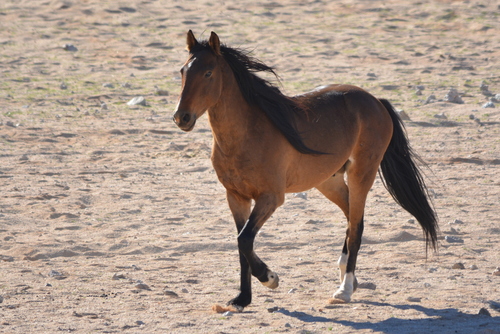
The horse is a domesticated, one-toed, hoofed mammal. It belongs to the taxonomic family Equidae and is one of two extant subspecies of Equus ferus. The horse has evolved over the past 45 to 55 million years from a small multi-toed creature, Eohippus, into the large single-toed animal of today, originally in North America. Humans began domesticating horses around 4000 BCE in Central Asia, and their domestication is believed to have been widespread by 3000 BCE. Horses in the subspecies caballus are domesticated, although some domesticated populations live in the wild as feral horses. These feral populations are not true wild horses, which are horses that have never been domesticated. There is an extensive, specialized vocabulary used to describe equine-related concepts, covering everything from anatomy to life stages, size, colors, markings, breeds, locomotion, and behavior.
Fun Fact
Related to this ability to flee from predators in the wild is an unusual trait: horses are able to sleep both standing up and lying down, with younger horses tending to sleep significantly more than adults.
Quick Facts
Habitat
Live in the wild as feral horses.
Diet
To be updated
Lifespan
30 years
Threats
- Habitat Change
- Human Disturbance