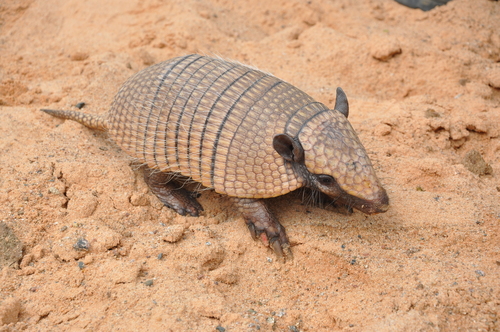
Six-banded Armadillo
Euphractus sexcinctus
Conservation Status
Least ConcernMammalia · Cingulata · Chlamyphoridae
About
The six-banded armadillo, also known as the yellow armadillo, is an armadillo found in South America. The sole extant member of its genus, it was first described by Swedish zoologist Carl Linnaeus in 1758. The six-banded armadillo is typically between 40 and 50 centimeters in head-and-body length, and weighs 3.2 to 6.5 kilograms. The carapace is pale yellow to reddish brown, marked by scales of equal length, and scantily covered by buff to white bristle-like hairs. The forefeet have five distinct toes, each with moderately developed claws.
Fun Fact
Six-banded armadillos are unusually aggressive for armadillos and have been known to eat carrion, small vertebrates, and even raid domestic poultry — far more omnivorous than most armadillo species.
Quick Facts
Habitat
Savannas and forests
Diet
Omnivore
Lifespan
15-18 years
Threats
- Illegal Logging
- Deforestation