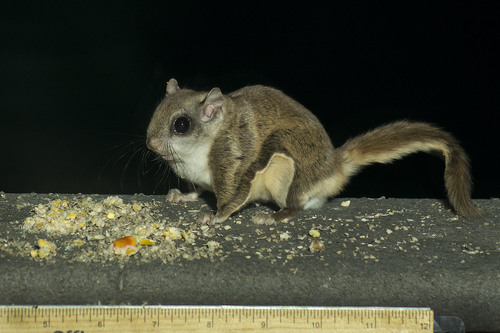
Northern Flying Squirrel
Glaucomys sabrinus
Conservation Status
Least ConcernMammalia · Rodentia · Sciuridae
About
The northern flying squirrel is one of three species of the genus Glaucomys, the only flying squirrels found in North America. They are found in coniferous and mixed coniferous forests across much of Canada, from Alaska to Nova Scotia, and south to the mountains of North Carolina and west to Utah in the United States. They are light brown with pale underparts and grow to a length of 25 to 37 cm. They are proficient gliders but uncoordinated walkers on the ground. They feed on a variety of plant material as well as tree sap, fungi, insects, carrion, bird eggs and nestlings. They mostly breed once a year in a cavity lined with lichen or other soft material. Except when they have young, they change nests frequently, and in winter a number of individuals may huddle together in a shared nest. Unlike most members of their family, flying squirrels are strictly nocturnal.
Fun Fact
The sharing of nests in winter by northern flying squirrels is important in maintaining body temperature (biothermal regulation), as northern flying squirrels do not hibernate, nor do they enter torpor states.
Quick Facts
Habitat
Found in coniferous and mixed coniferous forests across the top of North America, from Alaska to Nova Scotia, south to the mountains of North Carolina and Tennessee and west to Utah.
Diet
Eat lichens, all mast-crop nuts, tree sap, insects, carrion, bird eggs and nestlings, buds and flowers.
Lifespan
To be updated
Threats
- Habitat Change
- Human Disturbance