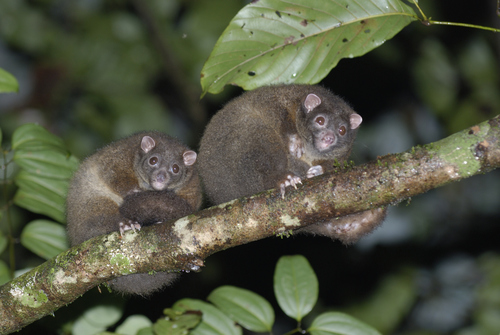
Lemuroid Ring-tailed Possum
Hemibelideus lemuroides
Conservation Status
Near ThreatenedMammalia · Diprotodontia · Pseudocheiridae
About
The lemuroid ringtail possum, also known as the lemur-like ringtail possum or the brushy-tailed ringtail, is a truly singular member of the ringtail possum group. It was once thought that they were greater gliders ; Hemibelideus literally translates as "half-glider". Named for their facial characteristics visually similar to the unrelated primate lemurs, with short snouts, large, forward-facing eyes and small ears, they are similar to other gliding possums in their musculo-skeletal adaptations to accommodate a leaping lifestyle. Their long, prehensile tail is a further adaptation to their arboreal habitat.
Fun Fact
It was once thought that they were greater gliders (Petauroides volans); Hemibelideus literally translates as "half-glider" (belideus being a diminutive form of Petaurus, meaning "glider").
Quick Facts
Habitat
Found in two main colour forms: the more common brownish-gray form, with a yellowish underbelly, and a rare white form, which occurred in the Daintree Rainforest and was last seen in 2005 in Mount Lewis National Park, and in 2008 believed to have been nearly extinct.
Diet
To be updated
Lifespan
To be updated
Threats
- Habitat Change
- Hunting and Collection
- Climate Change