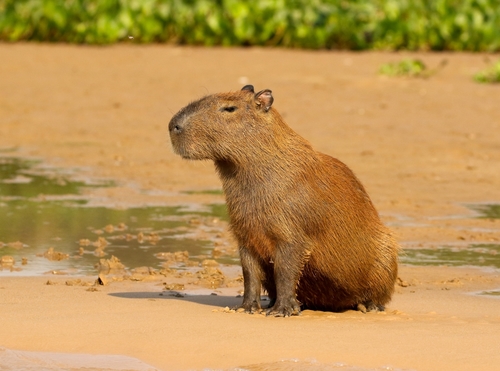
Capybara
Hydrochoerus hydrochaeris
Conservation Status
Least ConcernMammalia · Rodentia · Caviidae
About
The capybara or greater capybara is the largest living rodent, native to South America. It is a member of the genus Hydrochoerus. Its close relatives include guinea pigs and rock cavies, and it is more distantly related to the agouti, the chinchilla, and the nutria. The capybara inhabits savannas and dense forests, and lives near bodies of water. It is a highly social species and can be found in groups as large as one hundred individuals, but usually live in groups of 10–20 individuals. The capybara is hunted for its meat and hide and also for grease from its thick fatty skin.
Fun Fact
Capybaras are the world's largest living rodent (up to 66 kg / 145 lb) and are so social and calm that other species — birds, monkeys, and even small crocodilians — routinely sit on top of them.
Quick Facts
Habitat
Wetlands and riverbanks
Diet
Herbivore
Lifespan
8-10 years
Threats
- Invasive Aquatic Species
- Water Pollution