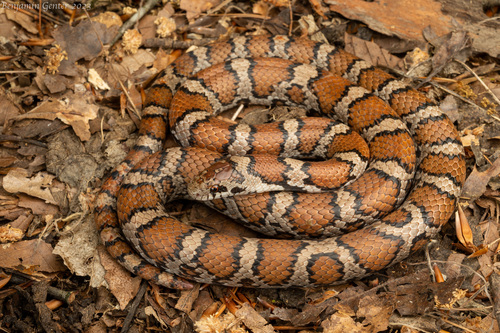
Eastern Milk Snake
Lampropeltis triangulum
Conservation Status
Least ConcernReptilia · Colubridae
About
The milk snake or milksnake, is a species of kingsnake; there were once up to 24 subspecies recognized, however fewer are officially recognized today. Lampropeltis elapsoides, the scarlet kingsnake, was formerly classified as a 25th subspecies, but is now recognized as a distinct species. The previously delineated subspecies have strikingly different appearances, and many of them have their own common names. Morphological and genetic data suggest that this species could be split into several separate species, and it has been by several authorities. Lampropeltis gentilis, Lampropeltis annulata, Lampropeltis abnorma, Lampropeltis polyzona, and Lampropeltis micropholis have been elevated to the species level. Milksnakes are not venomous.
Fun Fact
Eastern milk snakes mimic the banding of venomous coral snakes — their red-black-yellow pattern is close enough to deter predators who mistake them for the deadly coral snake.
Quick Facts
Habitat
Live in forested regions or areas of open woodland.
Diet
Eat crickets and other insects, slugs, and earthworms; in the western U.
Lifespan
12 years (captivity)
Threats
- Habitat Change
- Human Disturbance