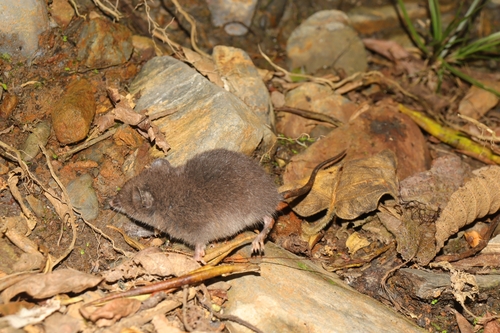
Incan Shrew Opossum
Lestoros inca
Conservation Status
Least ConcernMammalia · Paucituberculata · Caenolestidae
About
The Incan caenolestid, also known as the Incan shrew opossum or Peruvian caenolestid, is a caenolestid found in the southern Peruvian Andes. It was first described by English zoologist Oldfield Thomas in 1917. The head-and-body length ranges from 9 to 11.5 centimetres, and the weight is between 25 and 32 grams. It is brown on the back, and lighter on the underside. Little is known about the behaviour of the Incan caenolestid; it appears to be terrestrial and nocturnal. It feeds on small invertebrates and insects. This caenolestid inhabits elfin and secondary forests. The IUCN classifies it as least concern.
Fun Fact
The Incan caenolestid is the sole member of its genus, Lestoros, and is placed in the family Caenolestidae (shrew opossums).
Quick Facts
Habitat
Inhabits elfin and secondary forests.
Diet
Feeds on small invertebrates and insects.
Lifespan
To be updated
Threats
- Habitat Change
- Human Disturbance