Irish Elk
Megaloceros giganteus
Conservation Status
Data DeficientMammalia · Artiodactyla · Cervidae
About
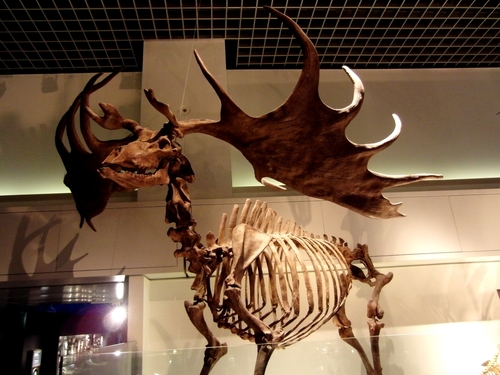
The Irish elk, also called the giant deer or Irish deer, is an extinct species of deer in the genus Megaloceros and is one of the largest deer that ever lived. Its range extended across northern Eurasia during the Pleistocene, from Ireland to Lake Baikal in Siberia. The most recent remains of the species have been radiocarbon dated to about 7,700 years ago in western Russia. Its antlers, which can span over 4.2 metres (13.8 ft) across, are the largest known of any deer. It is not closely related to either living species called the elk, with it being widely agreed that its closest living relatives are fallow deer (Dama).
Fun Fact
The Irish elk (Megaloceros giganteus), also called the giant deer or Irish deer, is an extinct species of deer in the genus Megaloceros and is one of the largest deer that ever lived.
Quick Facts
Habitat
Range, extending from the Atlantic Ocean in the West to Lake Baikal in the East.
Diet
Eat little during the autumn rut.
Lifespan
19 years
Threats
- Habitat Change
- Human Disturbance