Camas Pocket Gopher
Megascapheus bulbivorus
Conservation Status
Data DeficientMammalia · Rodentia · Geomyidae
About
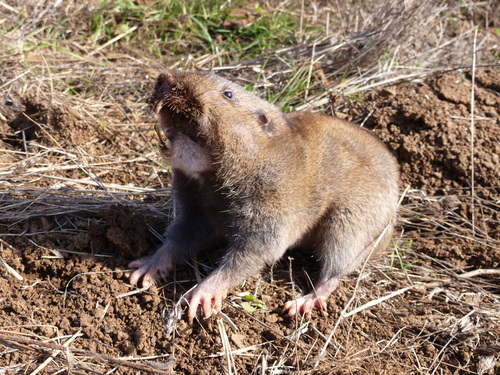
The camas pocket gopher, also known as the camas rat or Willamette Valley gopher, is a rodent, the largest member in the genus Thomomys, of the family Geomyidae. First described in 1829, it is endemic to the Willamette Valley of northwestern Oregon in the United States. The herbivorous gopher forages for vegetable and plant matter, which it collects in large, fur-lined, external cheek pouches. Surplus food is hoarded in an extensive system of tunnels. The dull-brown-to-lead-gray coat changes color and texture over the year. The mammal's characteristically large, protuberant incisors are well adapted for use in tunnel construction, particularly in the hard clay soils of the Willamette Valley. The gophers make chattering sounds with their teeth; males and females make purring sounds when they are together, and the young make twittering sounds. Born toothless, blind and hairless, the young grow rapidly before being weaned at about six weeks of age.
Fun Fact
The camas pocket gopher (Thomomys bulbivorus), also known as the camas rat or Willamette Valley gopher, is a rodent, the largest member in the genus Thomomys, of the family Geomyidae.
Quick Facts
Habitat
Found in the Willamette Valley and the drainage areas of the Yamhill River and other tributaries of the Willamette River.
Diet
Herbivore
Lifespan
To be updated
Threats
- Habitat Change
- Human Disturbance