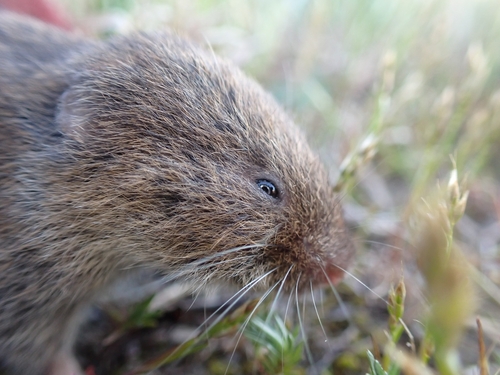
Lusitanian pine vole
Microtus lusitanicus
Conservation Status
Least ConcernMammalia · Rodentia · Cricetidae
About
The Lusitanian pine vole is a species of burrowing rodent in the family Cricetidae, endemic to the northwestern part of the Iberian Peninsula, including northern and central Portugal, northwest Spain, and extending into the French Pyrenees. Its range spans from sea level to elevations of around 2,000 metres in regions characterized by cool climates, mountainous terrains, and fertile, easily excavated soils. This monogamous species occupies relatively large home ranges averaging 950 square metres, shows intra-sexual territoriality, and is active throughout both day and night in short bursts interspersed with rest periods. The vole breeds year-round with slightly reduced activity during winter, producing small litters of one to four offspring. Common in agricultural landscapes with significant habitat diversity, particularly traditional Mediterranean agriculture with small fields and abundant hedgerows, the Lusitanian pine vole is considered an agricultural pest in orchard areas where population densities typically range from 100 to 200 individuals per hectare, though no significant threats currently endanger the species as a whole.
Fun Fact
Its range spans elevations from sea level up to 2,050 metres.
Quick Facts
Habitat
Endemic to Europe, specifically found in central and northern Portugal, northwest Spain, and extending into the extreme southwest of France.
Diet
To be updated
Lifespan
To be updated
Threats
- Habitat Change
- Human Disturbance