Western Polecat
Mustela putorius
Conservation Status
Least ConcernMammalia · Carnivora · Mustelidae
About
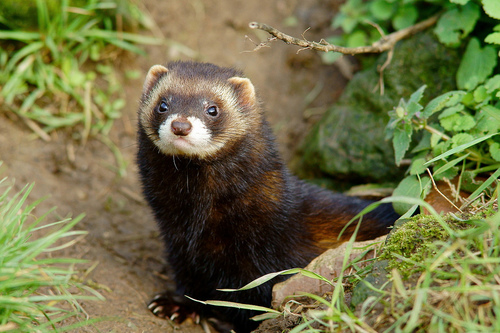
The European polecat, also known as the black polecat and forest polecat, is a mustelid species occurring in Europe and the Rif mountains. It is of a generally dark brown colour, with a pale underbelly and a dark mask across the face. Occasionally, colour mutations including albinos, leucists, isabellinists, xanthochromists, amelanists, and erythrists occur. It has a shorter, more compact body than other Mustela species, a more powerfully built skull and dentition, is less agile, and is well known for having the characteristic ability to secrete a particularly foul-smelling liquid to mark its territory.
Fun Fact
The European polecat is thought to be the sole ancestor of the ferret, which was domesticated more than 2,000 years ago for the purpose of hunting vermin.
Quick Facts
Habitat
Occurring in Europe and the Rif mountains.
Diet
Diet consists of mouse-like rodents, followed by amphibians and birds.
Lifespan
To be updated
Threats
- Habitat Change
- Human Disturbance