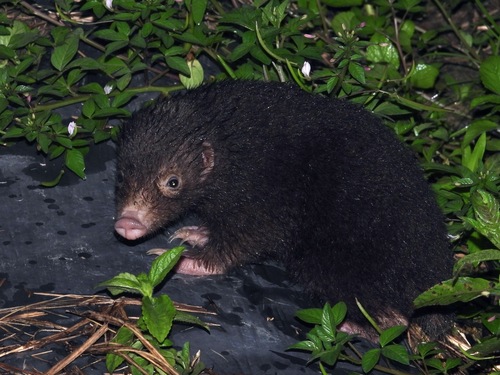
Palawan Stink-badger
Mydaus marchei
Conservation Status
Least ConcernMammalia · Carnivora · Mephitidae
About
The Palawan stink badger, pantot or tuldo in the Batak language, is a carnivoran of the western Philippines named for its resemblance to badgers, its powerful smell, and the largest island to which it is native, Palawan. Like all stink badgers, the Palawan stink badger was once thought to share a more recent common ancestor with badgers than with skunks. Recent genetic evidence, however, has led to their re-classification as one of the Mephitidae, the skunk family of mammals. It is the size of a large skunk or small badger, and uses its badger-like body to dig by night for invertebrates in open areas near patches of brush. While it lacks the whitish dorsal patches typical of its closest relatives, predators and hunters generally avoid the powerful noxious chemicals it can spray from the specialized anal glands characteristic of mephitids.
Fun Fact
The Palawan stink badger (Mydaus marchei), pantot or tuldo in the Batak language, is a carnivoran of the western Philippines named for its resemblance to badgers, its powerful smell, and the largest island to which it is native, Palawan.
Quick Facts
Habitat
Live primarily in the grasslands and cultivated areas on these islands, and use local shrubs for shelter.
Diet
Feed mainly on invertebrates, such as freshwater crabs and small insects, which they dig out of the ground with their long claws.
Lifespan
To be updated
Threats
- Habitat Change
- Human Disturbance