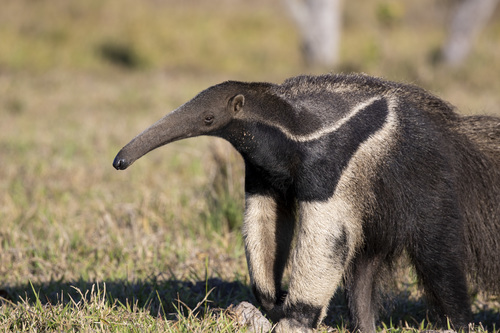
Giant Anteater
Myrmecophaga tridactyla
Conservation Status
Near ThreatenedMammalia · Pilosa · Myrmecophagidae
About
The giant anteater is an insectivorous mammal native to Central and South America. It is the largest of the four living species of anteaters, which are classified with sloths in the order Pilosa. The only extant member of the genus Myrmecophaga, the giant anteater is mostly terrestrial, in contrast to other living anteaters and sloths, which are arboreal or semiarboreal. The species is 182 to 217 cm in length, with weights of 33 to 50 kg for males and 27 to 47 kg for females. It is recognizable by its elongated snout, bushy tail, long foreclaws, and distinctively colored fur.
Fun Fact
Giant anteaters never destroy a termite mound completely — they flick their 60-cm tongue in and out up to 150 times per minute, harvest a few thousand insects, and move on to let the colony rebuild.
Quick Facts
Habitat
Grasslands and tropical forests
Diet
Insectivore
Lifespan
14-16 years
Threats
- Illegal Wildlife Trade
- Deforestation
- Wildfire