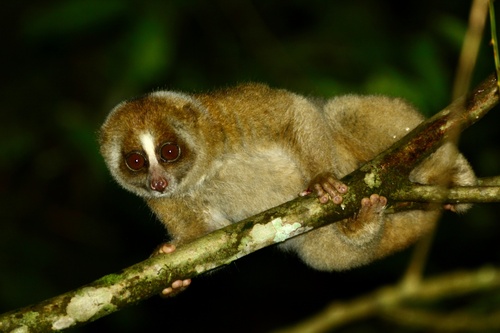
Philippine Slow Loris
Nycticebus menagensis
Conservation Status
VulnerableMammalia · Primates · Lorisidae
About
The Philippine slow loris is a strepsirrhine primate and a species of slow loris that is native to the north and east coastal areas of the island of Borneo, as well as the Sulu Archipelago in the Philippines. The species was first named as the Bornean slow loris in 1892, but lumped into the widespread Sunda slow loris (N. coucang) in 1952. However, it was promoted to full species status – again as the Bornean slow loris – based on molecular analysis in 2006. In 2013, two former subspecies of the Bornean slow loris were elevated to species status, and a new species—N. kayan—was recognized among the Bornean population.
Fun Fact
oz), it is one of the smallest of the slow lorises, and can be distinguished from other slow lorises by its pale golden to red fur, the lack of markings on its head, and consistent absence of a second upper incisor.
Quick Facts
Habitat
To be updated
Diet
Eat gum from woody plants.
Lifespan
To be updated
Threats
- Habitat Degradation
- Overexploitation
- Invasive Species
- Climate Change