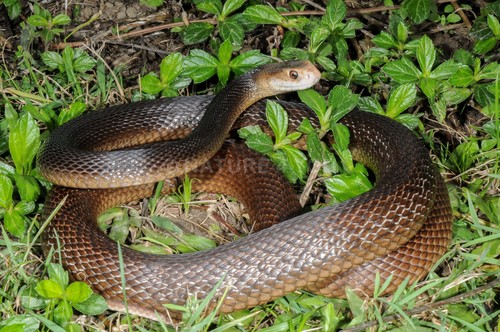
Coastal Taipan
Oxyuranus scutellatus
Conservation Status
Least ConcernReptilia · Elapidae
About
The coastal taipan, or common taipan, is a species of extremely venomous snake in the family Elapidae. Described by Wilhelm Peters in 1867, the species is native to the coastal regions of northern and eastern Australia and the island of New Guinea. The second-longest venomous snake in Australia, the coastal taipan averages around 2.0 m (6.6 ft) long, with the longest specimens reaching 2.9 m (9.5 ft) in length. It has light olive or reddish-brown upperparts, with paler underparts. The snake is considered to be a least-concern species according to the International Union for Conservation of Nature.
Fun Fact
The second-longest venomous snake in Australia, the coastal taipan averages around 2.
Quick Facts
Habitat
Found in a variety of different habitats, in warm, wetter, temperate to tropical coastal regions, monsoon forests, wet and dry sclerophyll forests and woodlands, and natural and artificial grassy areas, including grazing paddocks and disused rubbish tips.
Diet
Eat large prey, and lethal venom is to immobilise prey quickly before they can damage the predator.
Lifespan
19 years
Threats
- Habitat Change
- Human Disturbance