Eurasian Straight-tusked Elephant
Palaeoloxodon antiquus
Conservation Status
Data DeficientMammalia · Proboscidea · Elephantidae
About
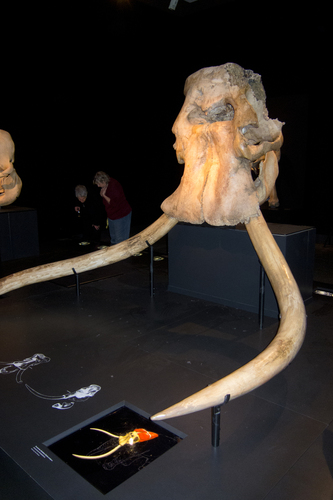
The straight-tusked elephant is an extinct species of elephant that inhabited Europe and Western Asia during the Middle and Late Pleistocene. One of the largest known elephant species, mature fully grown bulls on average had a shoulder height of 4 metres (13 ft) and a weight of 13 tonnes (29,000 lb), placing them among the largest land mammals ever. Straight-tusked elephants likely lived very similarly to modern elephants, with herds of adult females and juveniles and solitary adult males. The species was primarily associated with temperate and Mediterranean woodland and forest habitats, flourishing during interglacial periods, when its range would extend across Europe as far north as Great Britain and Denmark and eastwards into Russia, while persisting in southern Europe during glacial periods, when northern Europe was occupied by steppe mammoths and later woolly mammoths. Skeletons found in association with stone tools and in one case, a wooden spear, suggest they were scavenged and hunted by early humans, including Homo heidelbergensis and their Neanderthal successors.
Fun Fact
One of the largest known elephant species, mature fully grown bulls on average had a shoulder height of 4 metres (13 ft) and a weight of 13 tonnes (29,000 lb), placing them among the largest land mammals ever.
Quick Facts
Habitat
To be updated
Diet
To be updated
Lifespan
14–15 years
Threats
- Habitat Change
- Human Disturbance