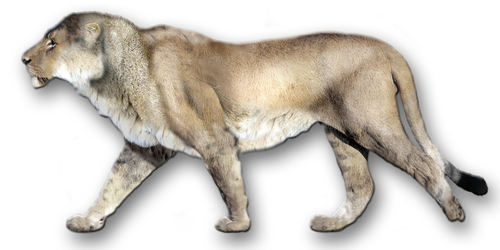
American Lion
Panthera atrox
Conservation Status
Data DeficientMammalia · Carnivora · Felidae
About
The American lion, with the species name meaning "savage" or "cruel", also called the North American lion) is an extinct pantherine cat native to North America during the Late Pleistocene from around 129,000 to 13,100 years ago. Genetic evidence suggests that its closest living relative is the lion, with the American lion representing an offshoot from the lineage of the largely Eurasian cave lion, from which it is suggested to have split around 165,000 years ago. Its fossils have been found across North America, from Canada to Mexico. It was about 25% larger than the modern lion, making it one of the largest known felids to ever exist, and a dominant apex predator in North American ecosystems, alongside the sabertooth cats Smilodon and Homotherium. It has been suggested, like modern lions, they were social animals, although this is not known for sure. Unlike modern lions, American lions may have been a diurnal predator.
Fun Fact
It was about 25% larger than the modern lion, making it one of the largest known felids to ever exist, and a dominant apex predator in North American ecosystems, alongside the sabertooth cats Smilodon and Homotherium.
Quick Facts
Habitat
Found in the same areas as the jaguar, which favored forests over open habitats.
Diet
Herbivore
Lifespan
To be updated
Threats
- Habitat Change
- Human Disturbance