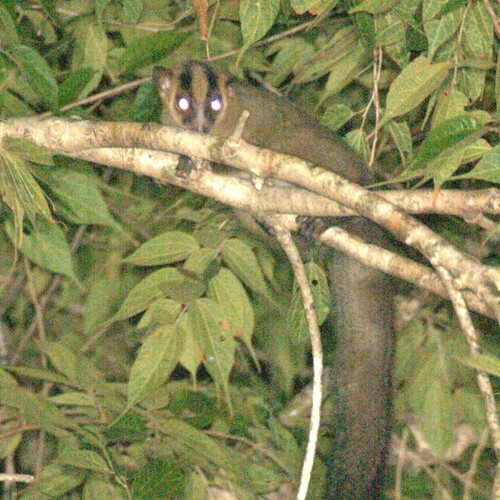
Sambirano Fork-marked Lemur
Phaner parienti
Conservation Status
EndangeredMammalia · Primates · Cheirogaleidae
About
Pariente's fork-marked lemur, or the Sambirano fork-marked lemur, is a species of lemur endemic to the Sambirano region of north-western Madagascar. This lemur has light brown to gray upperparts, a prominent facial fork and dorsal stripe that runs from the tail's tip to the point where it splits on the lemur's head to rejoin at the nose, and a white-tipped tail. It is found in lowland and mid-altitude humid forests and is nocturnal. It is an omnivore, eating tree gum, sap, bud exudes, insects and larvae. It sleeps in nests that have been abandoned by other lemurs, particularly Coquerel's giant mouse lemur. This species is relatively unknown, though it is threatened by habitat destruction. It was previously considered a subspecies of the Masoala fork-marked lemur. It is listed on CITES Appendix I.
Fun Fact
This lemur has light brown to gray upperparts, a prominent facial fork and dorsal stripe that runs from the tail's tip to the point where it splits on the lemur's head to rejoin at the nose, and a white-tipped tail.
Quick Facts
Habitat
Found in lowland and mid-altitude humid forests and is nocturnal.
Diet
Omnivore
Lifespan
To be updated
Threats
- Habitat Loss
- Poaching and Hunting
- Human-Wildlife Conflict
- Disease