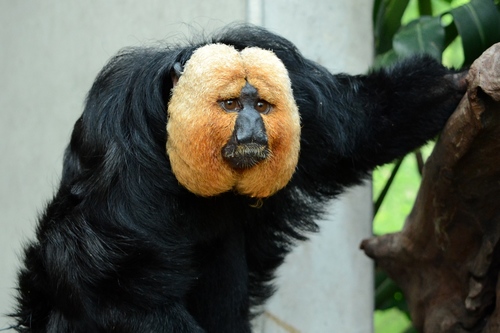
White-faced Saki
Pithecia pithecia
Conservation Status
Least ConcernMammalia · Primates · Pitheciidae
About
The white-faced saki, is a species of New World saki monkey. The small bodied neotropical primate can be found in Brazil, French Guiana, Guyana, Suriname, and Venezuela. This species feeds mostly on fruits, nuts, seeds, and insects. Although it is an arboreal species and is a specialist of brachiation, it is also terrestrial when foraging. Typical life expectancy is around 14 years in its natural habitat, although individuals have been recorded to live up to 36 years in captivity. The white faced saki is active in the day and sleeps highly elevated in trees with many leaves to shelter from weather and flying predators.
Fun Fact
White-faced sakis can leap up to 10 metres between trees and have been called 'flying monkeys' — their powerful hind legs and long, bushy tails make them among the most acrobatic New World primates.
Quick Facts
Habitat
Tropical rainforests
Diet
Frugivore
Lifespan
15-20 years
Threats
- Deforestation
- Illegal Logging