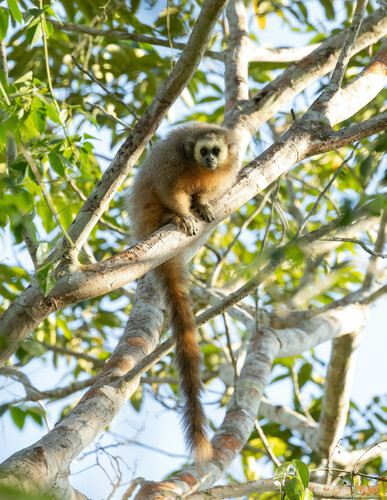
Rio Mayo Titi
Plecturocebus oenanthe
Conservation Status
Critically EndangeredMammalia · Primates · Pitheciidae
About
The Rio Mayo titi monkey is a species of titi monkey, a type of New World monkey, endemic to Peru. The Rio Mayo titi, was thought previously to have a small range of origin in the Alto Mayo valley, but research has proven that the range extends southward and reaches the Bajo Mayo and Huallaga Central. It had been classified as vulnerable but due to major habitat loss and restricted living space, it is now classified as Critically Endangered. In October 2012, it was included in The World's 25 Most Endangered Primates list. An increase in deforestation is leading to the decrease in available living space for this titi monkey, forcing it to live in sympatry with another species of Callicebus. Yet in some areas, such drastic deforestation has resulted in extremely high population density. The Rio Mayo titi is better adapted to moderately populated areas, thus overpopulation negatively impacts the species. The forests the Rio Mayo titi lives in are being destroyed for agricultural purposes, leaving little forest for the monkeys. They were only seen a few times and featured in museums until 2003 when more research was done on them. In order for this species to survive, their forests need to be protected to avoid overpopulation. Different conservation groups are working to help P. oenanthe survive. Neotropical Primate Conservation, Proyecto Mono Tocón and Amazónicos para la Amazonia are working in the more southern areas to protect the monkey. The Rio Mayo titi is a fairly inconspicuous creature, making observation and research difficult to obtain. Therefore, the traditional use of transect observation to monitor the monkey's population, is less effective. Instead, other methods of calculating the titi monkey's density in certain areas have been taken, such as research into the species-specific calls endemic to a certain area.
Fun Fact
The Rio Mayo titi, was thought previously to have a small range of origin in the Alto Mayo valley, but research has proven that the range extends southward and reaches the Bajo Mayo and Huallaga Central.
Quick Facts
Habitat
Lives in are being destroyed for agricultural purposes, leaving little forest for the monkeys.
Diet
Diet of the Rio Mayo titi consists of mostly leaves, seeds, fruits, and arthropods.
Lifespan
To be updated
Threats
- Habitat Destruction
- Pollution
- Invasive Species
- Over-Collection
- Climate Change