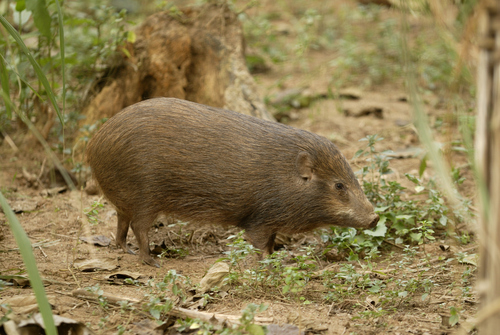
Pygmy Hog
Porcula salvania
Conservation Status
EndangeredMammalia · Artiodactyla · Suidae
About
The pygmy hog is a very small and endangered species of pig and the only species in the genus Porcula. Endemic to India, the pygmy hog is a suid native of the alluvial grasslands in the foothills of the Himalayas, at elevations of up to 300 m (980 ft). Populations of pygmy hogs were once widespread in the tall, dense, wet grasslands in a narrow belt of the southern Himalayan foothills from north-western Uttar Pradesh to Assam, through southern Nepal and North Bengal, and possibly extending into contiguous habitats in southern Bhutan. Due to human encroachment and destruction of the pygmy hogs' natural habitat, the species was thought to have gone extinct in the early 1960s. However, in 1971, a small pygmy hog population was rediscovered as they were fleeing a fire near the Barnadi Wildlife Sanctuary in Assam. Today, the only known population of pygmy hogs resides in Manas National Park in Assam, India. The population is threatened by livestock grazing, fires and poaching. With an estimated population of less than 250 mature individuals, the pygmy hog is listed as an Endangered species on the IUCN Red List, and conservation efforts such as captive breeding and re-release programs are currently being employed.
Fun Fact
However, in 1971, a small pygmy hog population was rediscovered as they were fleeing a fire near the Barnadi Wildlife Sanctuary in Assam.
Quick Facts
Habitat
Lived in small grassland pockets of Manas National Park in Assam and in an adjacent reserve forest in the Manas Tiger Reserve.
Diet
To be updated
Lifespan
14 years (wild)
Threats
- Habitat Loss
- Poaching and Hunting
- Human-Wildlife Conflict
- Disease