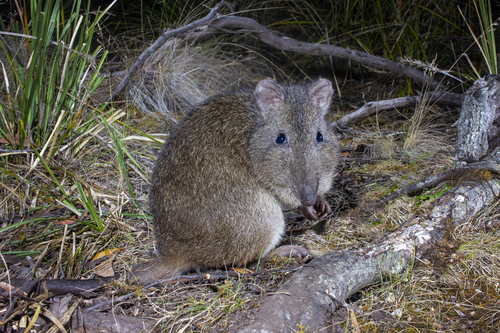
Long-nosed Potoroo
Potorous tridactylus
Conservation Status
VulnerableMammalia · Diprotodontia · Potoroidae
About
The long-nosed potoroo is a small, hopping mammal native to forests and shrubland of southeastern Australia and Tasmania. A member of the potoroo and bettong family (Potoroidae), it lives alone and digs at night for fungi, roots, or small insects. It is also a marsupial and carries its young in a pouch. The long-nosed potoroo is threatened by habitat loss and introduced species such as cats or foxes. There are two subspecies: P. t. tridactylus on mainland Australia, and P. t. apicalis on Tasmania, with lighter fur.
Fun Fact
Long-nosed potoroos are one of the few mammals that eat underground fungi (truffles) as their primary diet — they spread fungal spores in their droppings, which is essential for forest tree health.
Quick Facts
Habitat
Forests and heathlands
Diet
Omnivore
Lifespan
5-7 years
Threats
- Habitat Fragmentation
- Wildfire
- Poaching