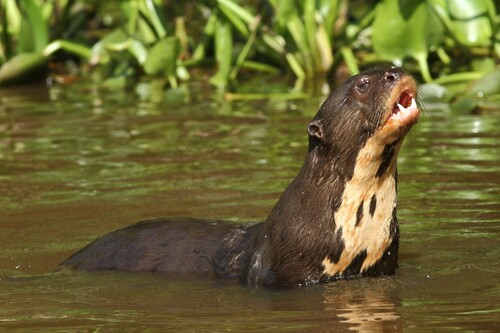
Giant Otter
Pteronura brasiliensis
Conservation Status
EndangeredMammalia · Carnivora · Mustelidae
About
The giant otter or giant river otter is a South American carnivorous mammal. It is the longest member of the weasel family, Mustelidae, a globally successful group of predators, reaching up to 1.8 m. Atypical of mustelids, the giant otter is a social species, with family groups typically supporting three to eight members. The groups are centered on a dominant breeding pair and are extremely cohesive and cooperative. Although generally peaceful, the species is territorial, and aggression has been observed between groups. The giant otter is diurnal, being active exclusively during daylight hours. It is the noisiest otter species, and distinct vocalizations have been documented that indicate alarm, aggression, and reassurance.
Fun Fact
Giant otters are the longest mustelids, reaching 1.8 metres, and they hunt in cooperative family groups that can overpower caimans and anacondas — each individual has a unique throat patch used for identification.
Quick Facts
Habitat
Rivers and wetlands
Diet
Piscivore
Lifespan
10-13 years
Threats
- Mercury Pollution from Gold Mining
- Historical Fur Trade Extirpation
- Overfishing and Prey Depletion
- Deforestation and River Degradation