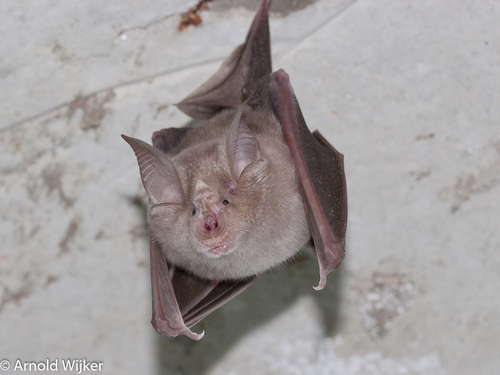
Greater Horseshoe Bat
Rhinolophus ferrumequinum
Conservation Status
Least ConcernMammalia · Chiroptera · Rhinolophidae
About
The greater horseshoe bat is an insectivorous bat of the genus Rhinolophus. Its distribution covers Europe, Northern Africa, Central Asia and Eastern Asia. It is the largest of the horseshoe bats in Europe and is thus easily distinguished from other species. The species is sedentary, typically travelling up to 30 kilometres (19 mi) between the winter and summer roosts, with the longest recorded movement being 180 km (110 mi). The frequencies used by this bat species for echolocation lie between 69–83 kHz, have most energy at 81 kHz and have an average duration of 37.4 ms.
Fun Fact
Greater horseshoe bats emit echolocation through their nostrils, using their elaborate horseshoe-shaped nose-leaf to focus the ultrasound into a precise beam — they can detect a moth's wing-flutter from 6 metres.
Quick Facts
Habitat
Caves and forests
Diet
Insectivore
Lifespan
15-30 years
Threats
- Wildfire
- Habitat Fragmentation