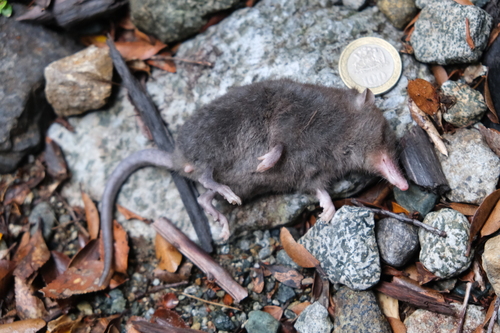
Chilean Shrew Opossum
Rhyncholestes raphanurus
Conservation Status
Near ThreatenedMammalia · Paucituberculata · Caenolestidae
About
The long-nosed caenolestid, also known as the Chilean shrew opossum or long-nosed shrew opossum, is a shrew opossum that occurs in temperate forests of Argentina and southern Chile. It was first described by American zoologist Wilfred Hudson Osgood in 1924. The long-nosed caenolestid resembles Caenolestes species in morphology. It is characterized by a long, pointed snout, small eyes and ears, and one claw on a digit of each of the thin limbs. Little is known of its behavior; it appears to be terrestrial, nocturnal and omnivorous. It prefers cool, moist areas, and has a small distribution. It is classified as near threatened by the IUCN.
Fun Fact
The long-nosed caenolestid is the sole member of its genus, and is classified in the family Caenolestidae.
Quick Facts
Habitat
Occurs in temperate forests of Argentina and southern Chile.
Diet
Omnivore
Lifespan
To be updated
Threats
- Habitat Change
- Hunting and Collection
- Climate Change