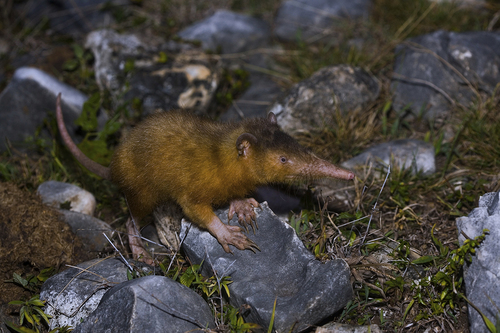
Hispaniolan Solenodon
Solenodon paradoxus
Conservation Status
Least ConcernMammalia · Eulipotyphla · Solenodontidae
About
The Hispaniolan solenodon, also known as the agouta, is a small, furry, shrew-like mammal endemic to the Caribbean island of Hispaniola. Like other solenodons, it is a venomous, insect-eating animal that lives in burrows and is active at night. It is an elusive animal and was only first described in 1833; its numbers are stable in protected forests but it remains the focus of conservation efforts.
Fun Fact
Hispaniolan solenodons are so evolutionarily ancient that they lack the typical mammalian ball-and-socket hip joint — they waddle rather than run, yet have survived on Hispaniola since the time of the dinosaurs.
Quick Facts
Habitat
Forests
Diet
Insectivore
Lifespan
6-11 years
Threats
- Small Population Size
- Illegal Wildlife Trade
- Genetic Bottleneck
- Poaching
External Data Sources
More Mammals Species
Abbott's Duiker EN
Abbott's Gibbon EN
Addax CR
African Elephant EN
African Forest Elephant CR
African Wild Ass CR
Browse all Mammals →