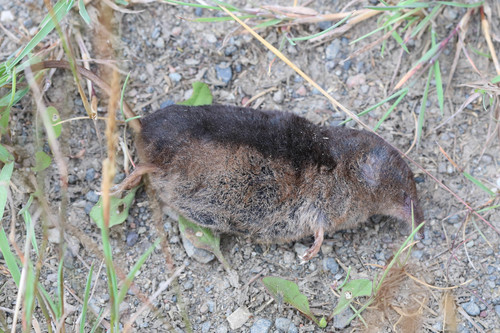
Arctic Shrew
Sorex arcticus
Conservation Status
Least ConcernMammalia · Soricomorpha · Soricidae
About
The Arctic shrew, also known as the blackback shrew or saddlebacked shrew, is a medium-sized shrew found in Canada and the northern United States. Separate species status has been proposed for the maritime shrew which is found in New Brunswick and Nova Scotia and had been considered to be a subspecies of the Arctic shrew. The tundra shrew was formerly considered to be a subspecies of the Arctic shrew.
Fun Fact
The only known predators of Arctic shrews are great horned owls.
Quick Facts
Habitat
Found in greatest quantity and density in areas near bodies of water, such as lakes, streams, marshes, wetlands, bogs, swamps, ditches or open areas near wetlands.
Diet
Eats insects, worms and small invertebrates, with a large proportion of its diet made up of larch sawflies, though Arctic shrews in captivity have been fed dead voles, fly pupae, and mealworms.
Lifespan
To be updated
Threats
- Habitat Change
- Human Disturbance