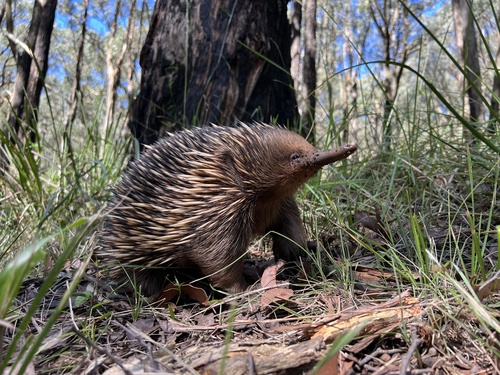
Short-beaked Echidna
Tachyglossus aculeatus
Conservation Status
Least ConcernMammalia · Monotremata · Tachyglossidae
About
The short-beaked echidna, also known as the common echidna, or short-nosed echidna, is one of four living species of echidna, and the only member of the genus Tachyglossus, from Ancient Greek ταχύς, meaning "fast", and γλῶσσα, meaning "tongue". It is covered in fur and spines and has a distinctive snout and a specialised tongue, which it uses to catch its insect prey at a great speed. Like the other extant monotremes, the short-beaked echidna lays eggs; the monotremes are the only living group of mammals to do so.
Fun Fact
Short-beaked echidnas are one of only five living monotremes (egg-laying mammals), and they have a four-headed penis, but only use two heads at a time — males also have venomous spurs on their hind legs.
Quick Facts
Habitat
Forests, grasslands, and deserts
Diet
Insectivore
Lifespan
15-50 years
Threats
- Illegal Logging
- Habitat Fragmentation