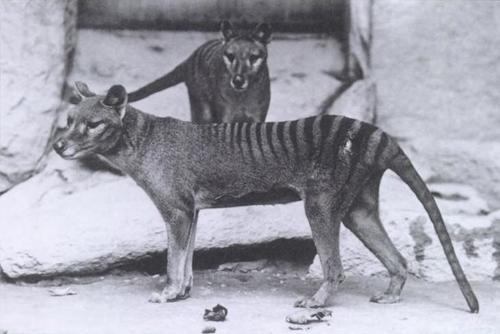
Thylacine
Thylacinus cynocephalus
Conservation Status
ExtinctMammalia · Dasyuromorphia · Thylacinidae
About
The thylacine, also commonly known as the Tasmanian tiger or Tasmanian wolf, is an extinct species of carnivorous marsupial that was native to the Australian mainland and the islands of Tasmania and New Guinea. The thylacine died out in New Guinea and mainland Australia around 3,600–3,200 years ago, possibly because of the introduction of the dingo, whose earliest record dates to around the same time, but which never reached Tasmania. Prior to European settlement, around 5,000 remained in the wild on the island of Tasmania. Beginning in the nineteenth century, they were perceived as a threat to the livestock of farmers and bounty hunting was introduced. The last known of its species died in 1936 at Hobart Zoo in Tasmania. The thylacine is widespread in popular culture and is a cultural icon in Australia.
Fun Fact
Thylacines (Tasmanian tigers) were the largest carnivorous marsupials of modern times — the last known individual died in Hobart Zoo in 1936 — and their DNA has been sequenced for potential de-extinction efforts.
Quick Facts
Habitat
Eucalyptus forests and grasslands
Diet
Carnivore
Lifespan
5-7 years
Threats
- Habitat Fragmentation
- Small Population Size
- Genetic Bottleneck
- Illegal Logging