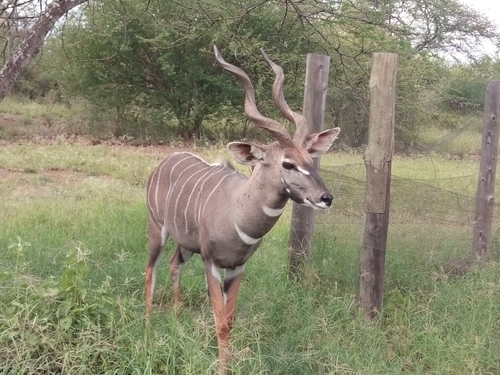
Lesser Kudu
Tragelaphus imberbis
Conservation Status
Near ThreatenedMammalia · Artiodactyla · Bovidae
About
The lesser kudu is a medium-sized bushland antelope found in East Africa. The species is a part of the ungulate genus Tragelaphus, along with several other related species of striped, spiral-horned African bovids, including the related greater kudu, the bongo, bushbuck, common and giant elands, nyala and sitatunga. It was first scientifically described by English zoologist Edward Blyth (1869).
Fun Fact
Males and females both display a series of unique white markings and patches, including white lips, two small spots on both cheeks, a spot at the base of each ear, two spots between the eyes, white eyelids, a white throat patch, and a patch of white atop the chest.
Quick Facts
Habitat
Inhabits dry bushland regions, bordering on arid grasslands, as well as scrubland and light open forest habitat.
Diet
Feeds on foliage from bushes and trees (shoots, twigs) and herbs.
Lifespan
10 years
Threats
- Habitat Change
- Hunting and Collection
- Climate Change