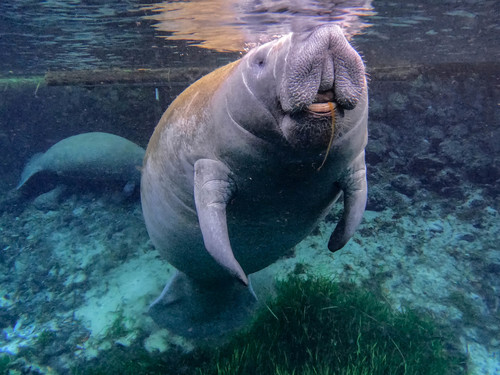
West Indian Manatee
Trichechus manatus
Conservation Status
Near ThreatenedMammalia · Sirenia · Trichechidae
About
The West Indian manatee, also known as the North American manatee, is a large, aquatic mammal native to warm coastal areas of the Caribbean, from the Eastern United States to northern Brazil. Living alone or in herds, it feeds on underwater plants and uses its whiskers to navigate. It is divided into two subspecies, the Florida manatee in the United States and the Antillean manatee in the Caribbean, both of which are endangered and face pressure from habitat loss, pollution, and other human activity. The West Indian manatee is the largest living member of the sirenians, a group of large aquatic mammals that includes the dugong, other manatees, and the extinct Steller's sea cow.
Fun Fact
West Indian manatees are so buoyant they use their heavy bones as ballast — manatee bones are the densest of any mammal, lacking marrow cavities, which helps them hover at any depth without effort.
Quick Facts
Habitat
Coastal waters and rivers
Diet
Herbivore
Lifespan
40-60 years
Threats
- Water Pollution
- Poaching
- Invasive Aquatic Species