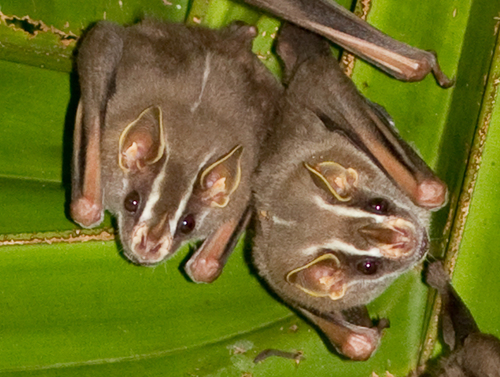
Common tent-making Bat
Uroderma bilobatum
Conservation Status
Least ConcernMammalia · Chiroptera · Phyllostomidae
About
The tent-making bat is an American leaf-nosed bat (Phyllostomidae) found in lowland forests of Central and South America. This medium-sized bat has a gray coat with a pale white stripe running down the middle of the back. Its face is characterized by a fleshy nose-leaf and four white stripes. Primarily a frugivore, it may supplement its diet with insects, flower parts, pollen, and nectar. Its common name comes from its behavior of constructing tents out of large, fan-shaped leaves. These roosts provide excellent protection from the tropical rains, and a single tent roost may house several bats at once. This bat is quite common in its geographic range; hence, its conservation status is listed as Least Concern.
Fun Fact
These bats send their echolocation calls out their nostrils, and so the noseleaf may help direct the sounds that they emit.
Quick Facts
Habitat
Found in lowland forests of Central and South America.
Diet
Frugivore (fruit-eater)
Lifespan
To be updated
Threats
- Habitat Change
- Human Disturbance