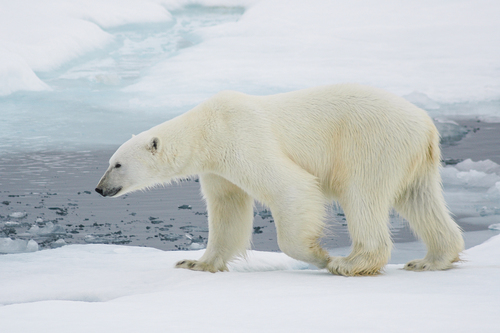
Polar Bear
Ursus maritimus
Conservation Status
Near ThreatenedMammalia · Carnivora · Ursidae
About
The polar bear is a large bear native to the Arctic and nearby areas. It is closely related to the brown bear, and the two species can interbreed. The polar bear is the largest extant species of bear and land carnivore by body mass, with adult males weighing 300–800 kg (660–1,760 lb). The species is sexually dimorphic, as adult females are much smaller. The polar bear is white- or yellowish-furred with black skin and a thick layer of fat. It is more slender than the brown bear, with a narrower skull, longer neck and lower shoulder hump. Its teeth are sharper and more adapted to cutting meat. The paws are large and allow the bear to walk on ice and paddle in the water.
Fun Fact
Polar bear fur isn't white — it's transparent and hollow, scattering light to appear white, while their skin underneath is jet black to absorb heat from the Arctic sun.
Quick Facts
Habitat
Arctic sea ice and tundra
Diet
Carnivore
Lifespan
25-30 years
Threats
- Shipping Traffic
- Poaching
- Ocean Pollution