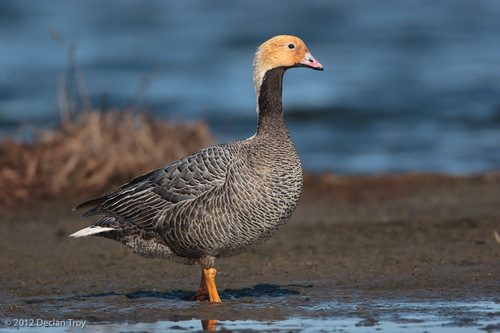
Emperor Goose
Anser canagicus
Conservation Status
Least ConcernAves · Anseriformes · Anatidae
About
The emperor goose, also known as the beach goose or the painted goose, is a waterfowl species in the family Anatidae, which contains the ducks, geese, and swans. In summer, the emperor goose is found in remote coastal areas near the Bering Sea in arctic and sub-arctic Alaska and the Russian Far East, where it breeds in monogamous pairs. It migrates south to winter in ice-free mudflats and coasts in Alaska, mostly the Aleutian Islands, and Canada's British Columbia, rarely reaching the contiguous United States. Listed as near threatened by the International Union for Conservation of Nature, the species' population is declining due to threats such as pollution, hunting, and climate change.
Fun Fact
Although the species can live to age 25 in captivity, it reaches age 12 in the wild.
Quick Facts
Habitat
Found in remote coastal areas near the Bering Sea in arctic and sub-arctic Alaska and the Russian Far East, where it breeds in monogamous pairs.
Diet
Diet consists of vegetation, such as shoots, roots, and berries, while in the winter it primarily eats bivalve molluscs (which it uses its sense of touch to catch) and algae.
Lifespan
To be updated
Threats
- Habitat Change
- Human Disturbance