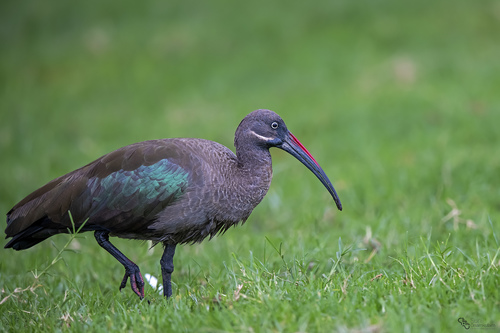
Hadada Ibis
Bostrychia hagedash
Conservation Status
Least ConcernAves · Pelecaniformes · Threskiornithidae
About
The hadada ibis or hadeda is an ibis native to Sub-Saharan Africa. It is named for its loud three to four note calls uttered in flight especially in the mornings and evenings when they fly out or return to their roost trees. Although not as dependent on water as some ibises, they are found near wetlands and often live in close proximity to humans, foraging in cultivated land and gardens. A medium-sized ibis with stout legs and a typical down-curved bill, the wing coverts are iridescent with a green or purple sheen. They are non-migratory but are known to make nomadic movements in response to rain particularly during droughts. Their ranges in southern Africa have increased with an increase in tree cover and irrigation in human-altered habitats.
Fun Fact
The nest is a platform of twigs placed in a major branch of a large tree, typically in a fork, and unlike most ibis species, in spite of their moderately gregarious nature, they do not nest in groups.
Quick Facts
Habitat
Occurs throughout Sub-Saharan Africa in open grasslands, savanna and wetlands, as well as urban parks, school fields, green corridors and large gardens.
Diet
Feed on insects, millipedes and earthworms, using their long scimitar-like bill to probe soft soil.
Lifespan
To be updated
Threats
- Habitat Change
- Human Disturbance