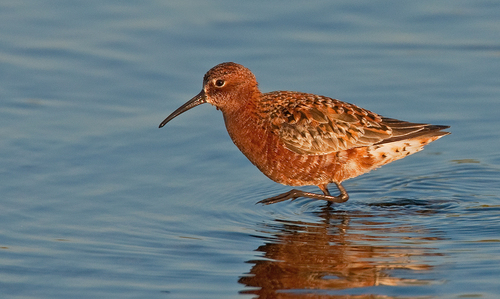
Curlew Sandpiper
Calidris ferruginea
Conservation Status
VulnerableAves · Charadriiformes · Scolopacidae
About
The curlew sandpiper is a small shorebird first described in 1763 by Erik Pontoppidan in the genus Tringa before being moved to its current genus, Calidris, in 1804 by Blasius Merrem. It is monotypic, with no subspecies recognised by any authority; however, it is known to hybridise with other shorebirds occasionally. It is a long-distance migrant, breeding in the Siberian Arctic, arriving there from June and staying to August, migrating south throughout Europe and Asia, to winter mainly in Africa but also along the coasts of Australasia and Southeast Asia. It is a vagrant to North America.
Fun Fact
They breed exclusively in the Siberian Arctic from the Yamal Peninsula to the Kolyuchin Bay.
Quick Facts
Habitat
Range includes coastal regions of west Africa (from Gabon to Mauritania and including Cape Verde) and southern Africa (inland throughout Mozambique to Namibia to South Africa, and north through Uganda to Kenya).
Diet
To be updated
Lifespan
To be updated
Threats
- Habitat Degradation
- Overexploitation
- Invasive Species
- Climate Change