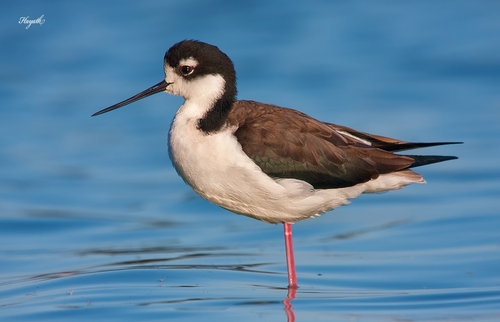
Black-necked Stilt
Himantopus mexicanus
Conservation Status
Data DeficientAves · Charadriiformes · Recurvirostridae
About
The black-necked stilt is a locally abundant shorebird of North and South American wetlands and coastlines. It is found from the coastal areas of California through much of the interior western United States and along the Gulf of Mexico as far east as Florida, then south through Central America and the Caribbean to Brazil, Peru and the Galápagos Islands, with an isolated population, the Hawaiian stilt, in Hawaii. The northernmost populations, particularly those from inland, are migratory, wintering from the extreme south of the United States to southern Mexico, rarely as far south as Costa Rica; on the Baja California peninsula it is only found regularly in winter. Some authorities, including the IUCN, treat it as a synonym of Himantopus himantopus.
Fun Fact
The clutch size generally is 3–5 eggs with an average of four.
Quick Facts
Habitat
Found in estuarine, lacustrine, salt pond and emergent wetland habitats; it is generally a lowland bird but in Central America has been found up to 8,200 ft (2,500 m) ASL and commonly seen in llanos habitat in northern South America.
Diet
Feed mainly on aquatic insects and their larvae, while coastal populations mostly eat other aquatic invertebrates.
Lifespan
To be updated
Threats
- Habitat Change
- Human Disturbance