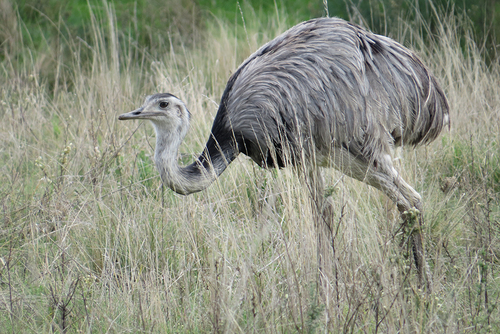
Greater Rhea
Rhea americana
Conservation Status
VulnerableAves · Rheiformes · Rheidae
About
The greater rhea is a species of flightless bird native to eastern South America. Other names for the greater rhea include the grey, common, or American rhea; ema (Portuguese); or ñandú. One of two species in the genus Rhea, in the family Rheidae, it inhabits a variety of open areas, such as grasslands, savanna or grassy wetlands. Weighing 20–27 kilograms (44–60 lb), the greater rhea is the largest native bird in the Americas. In the wild, the greater rhea has a life expectancy of 10.5 years. It is also notable for its reproductive habits, and for the fact that a population has established itself in Northern Germany in recent years. The species is listed as Near Threatened by the IUCN.
Fun Fact
Male greater rheas are the sole incubators and parents — a single male incubates eggs from up to 12 different females in one nest, then raises all the chicks alone for six months.
Quick Facts
Habitat
Grasslands and open savannas
Diet
Omnivore
Lifespan
10-15 years
Threats
- Overgrazing
- Agricultural Conversion
- Urban Expansion