Hellbender
Cryptobranchus alleganiensis
Conservation Status
Near ThreatenedAmphibia · Caudata · Cryptobranchidae
About
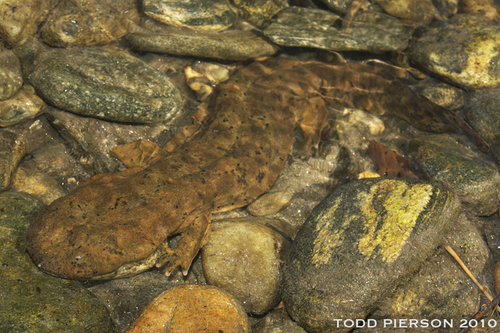
The hellbender, also known as the hellbender salamander, is a species of aquatic giant salamander endemic to the eastern and central United States. It is the largest salamander in North America. A member of the family Cryptobranchidae, the hellbender is the only extant member of the genus Cryptobranchus. Other closely related salamanders in the same family are in the genus Andrias, which contains the Japanese and Chinese giant salamanders. The hellbender is much larger than any other salamander in its geographic range, and employs an unusual adaption for respiration through cutaneous gas exchange via capillaries found in its lateral skin folds. It fills a particular niche—both as a predator and prey—in its ecosystem, which either it or its ancestors have occupied for around 65 million years. The species is listed as Vulnerable on the IUCN Red List of Threatened Species due to the impacts of disease and widespread habitat loss and degradation throughout much of its range.
Fun Fact
Easily distinguished from most other endemic salamander species simply by their size, hellbenders average up to 60 cm (2.
Quick Facts
Habitat
To be updated
Diet
Eat mayfly and caddisfly nymphs.
Lifespan
30 years (captivity)
Threats
- Habitat Change
- Human Disturbance