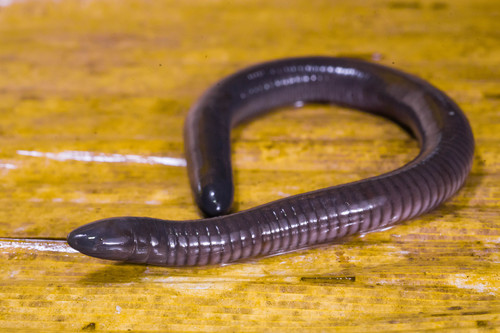
Mexican Caecilian
Dermophis mexicanus
Conservation Status
Least ConcernAmphibia · Gymnophiona · Dermophiidae
About
Dermophis mexicanus, also known commonly as the Mexican burrowing caecilian or the Mexican caecilian, and locally as the tapalcua or tepelcua, is a species of limbless amphibian in the family Dermophiidae. The species is native to Mexico and Central America, where it burrows under leaf litter and plant debris.
Fun Fact
Young Mexican caecilians use special fetal teeth to scrape nutrient-rich skin from their mother, who regenerates the outer layer every three days to feed her offspring.
Quick Facts
Habitat
Subtropical or tropical dry forests, moist lowland forests, moist montane forests, plantations, rural gardens, and heavily degraded former forests
Diet
Feeds on invertebrates, including earthworms, termites, crickets, slugs, and snails.
Lifespan
To be updated
Threats
- Habitat Change
- Human Disturbance